From Hauula Farms to Your Lunch: A Look at Locally Grown Ingredients on Oahu
· Aloha Salads
When you order a salad, you probably notice the ingredients first: juicy tomatoes, crisp cucumbers, fresh herbs, and colorful vegetables. But have you ever wondered where those ingredients come from before they reach your plate?
On Oahu, locally grown produce can travel from a neighborhood farm to a restaurant kitchen through a surprisingly straightforward supply chain. For some ingredients, that means regular orders from local growers. For others, it means working with produce distributors that carry both Hawaii-grown and imported products.
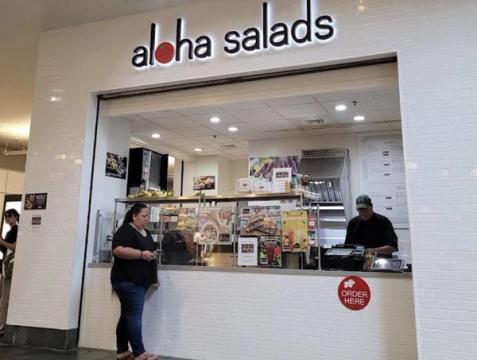
At Aloha Salads, supporting local agriculture has been part of our mission since we opened our first restaurant in Kailua in 2006.
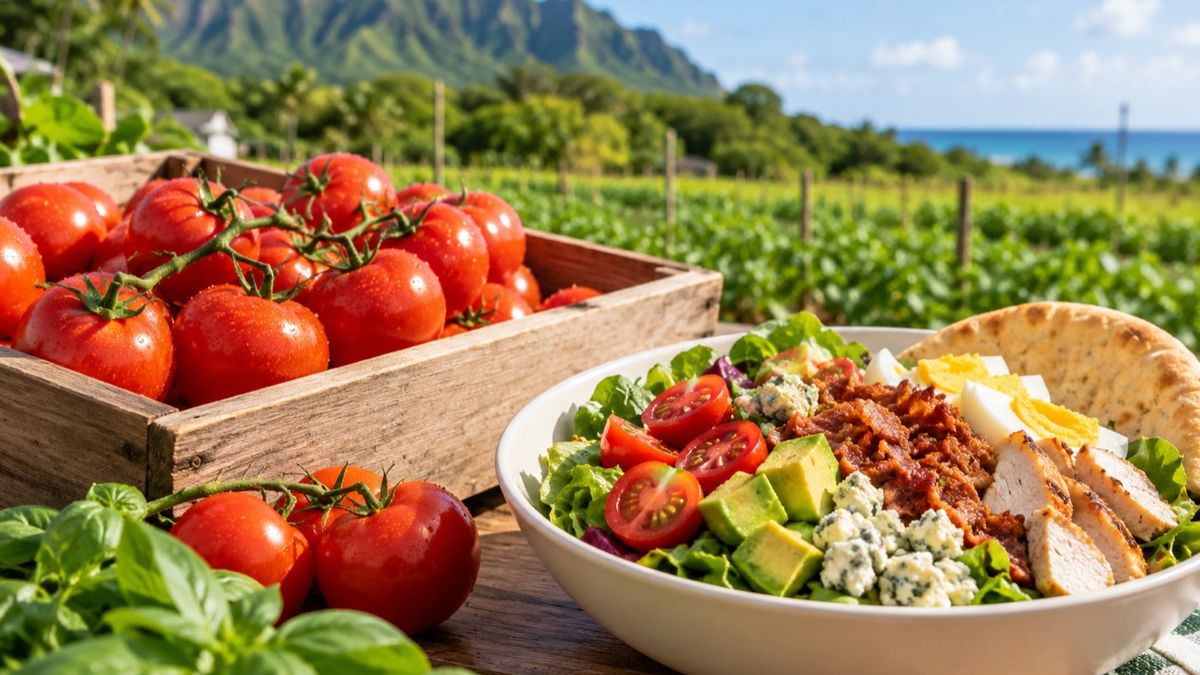
One example is our standing weekly order for vine-ripe tomatoes grown at a farm in Hauula.
Here's a closer look at how locally grown produce on Oahu makes its way into restaurant kitchens, what we know about our ingredients, and why sourcing transparency matters.
From a Hauula Farm to Aloha Salads
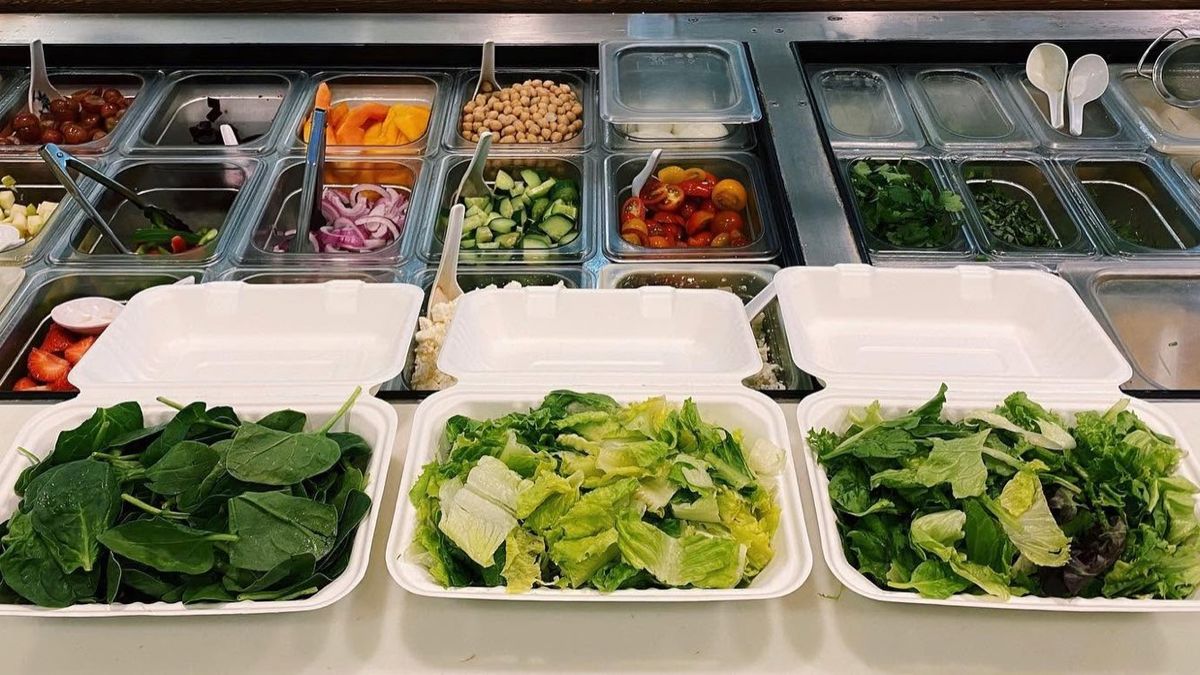
Hauula, on Oahu's windward coast, is part of the island's agricultural landscape. For our kitchens, it is also the source of a specific ingredient we order regularly: vine-ripe tomatoes.
We maintain a standing weekly order with a farm in Hauula for tomatoes identified on our supplier invoices as Hauula Vine Ripe Tomatoes.
That detail matters because it connects a general commitment to local agriculture with a documented purchasing practice.
Rather than simply describing our food as locally inspired, we can point to an actual ingredient, where it is grown, and how regularly we order it.
Other Oahu-Grown Ingredients We Source
Our local produce sourcing extends beyond one tomato farm.
We also receive cucumbers and another tomato variety from a separate Oahu farm. In addition, some of the produce arriving through our regular distributor is identified as Hawaii-grown.
For example, a September produce invoice included several Hawaii-grown ingredients.
| Ingredient | What we can confirm |
|---|---|
| Vine-ripe tomatoes | Standing weekly order from a Hauula farm |
| Cucumbers | Sourced from another Oahu farm |
| Second tomato variety | Also sourced from another Oahu farm |
| Green onions | Identified as Hawaii-grown on a September produce invoice |
| Sweet basil | Identified as Hawaii-grown on a September produce invoice |
| Bean sprouts | Identified as Hawaii-grown on a September produce invoice |
| Green bell peppers | Identified as Hawaii-grown on a September produce invoice |
The distinction is important: our locally sourced produce selection can vary from week to week.
An ingredient appearing as Hawaii-grown on one delivery does not mean every future order of that ingredient will have the same origin.
We also don't describe every vegetable or salad green on our menu as locally grown. Our approach is to share the sourcing information we can substantiate.
How These Ingredients Connect to Our Menu
You don't have to visit a farm to appreciate the ingredients that go into a good lunch.
At Aloha Salads, tomatoes, cucumbers, herbs, and other vegetables appear throughout our menu. Different combinations bring out different textures and flavors.
Here are a few dishes worth exploring.
Aloha Mediterranean: Tomatoes, Cucumbers, and Bell Peppers
Our Aloha Mediterranean brings together romaine, grape tomatoes, kalamata olives, feta, bell peppers, red onion, cucumbers, garbanzo beans, dill, and Mediterranean dressing.
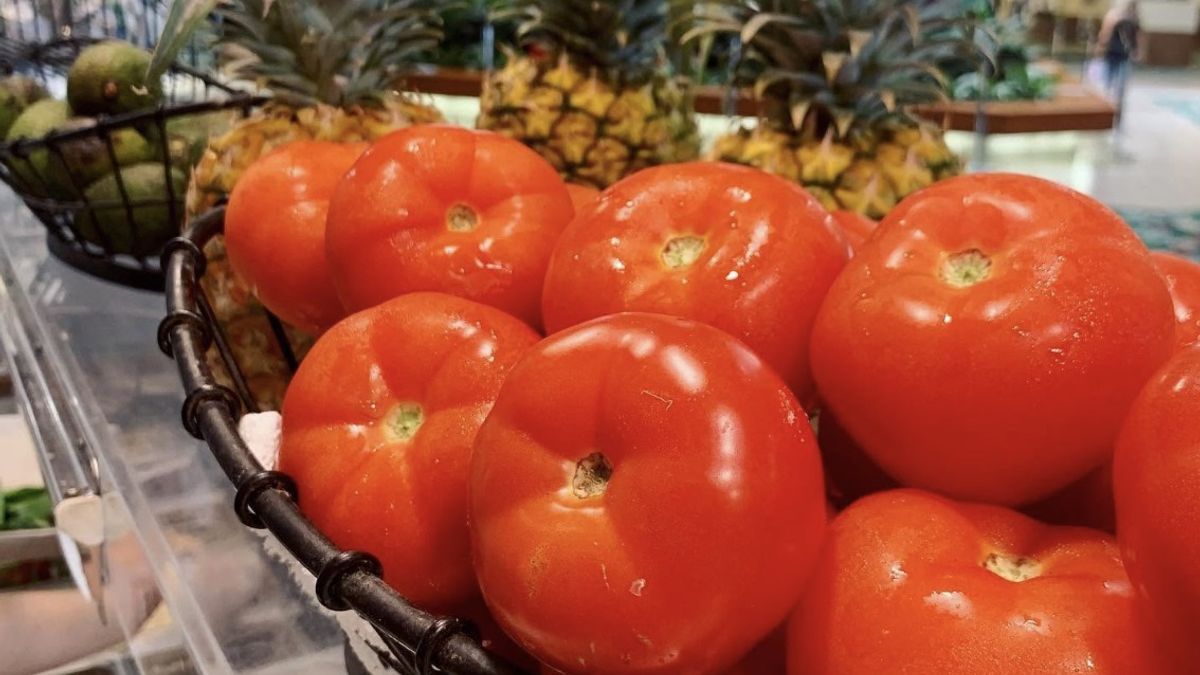
The tomatoes and cucumbers add contrast to the feta and olives, while the bell peppers contribute crunch.
It's a useful example of how vegetables work together in a salad rather than simply serving as a base.
Maui Mozzarella: Tomatoes and Basil
Our Maui Mozzarella pairs mixed greens with tomatoes, fresh mozzarella, red onions, and basil, finished with balsamic vinaigrette and balsamic glaze.
Tomatoes and basil are a familiar pairing for a reason. The basil brings an aromatic note, while the tomatoes balance the creamy mozzarella.
It's also a good illustration of why the origin of individual ingredients is worth discussing rather than assuming every component of a dish comes from the same place.
Kamuela Cobb: A Mix of Vegetables and Hearty Toppings
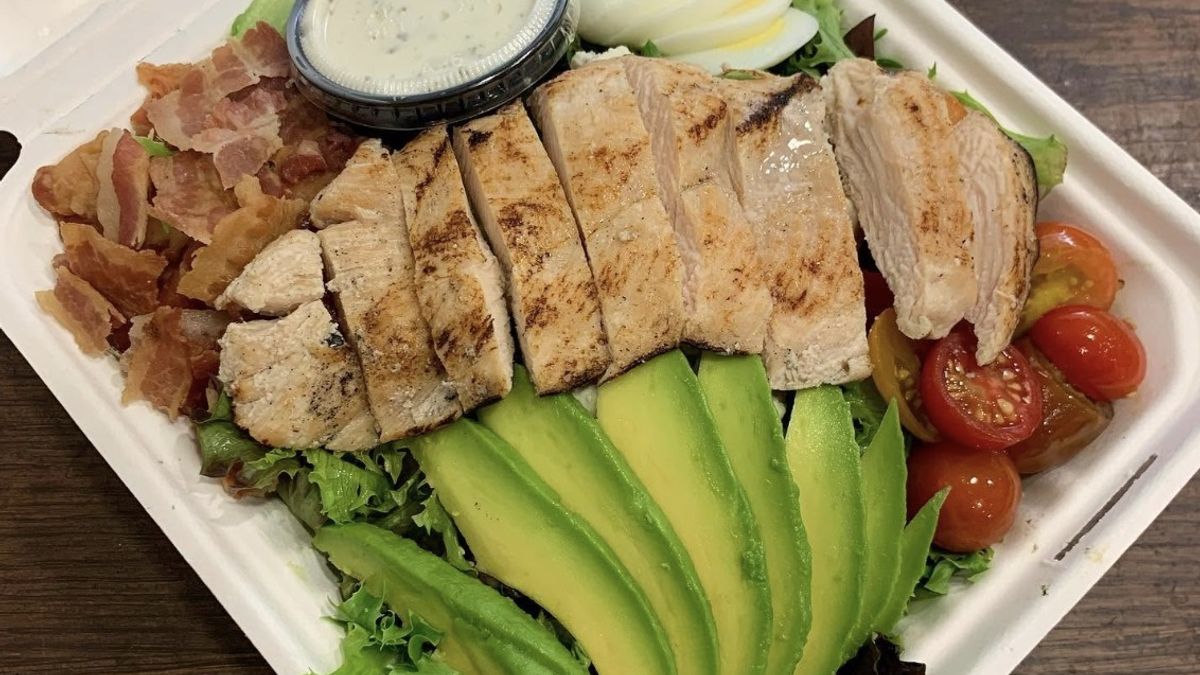
The Kamuela Cobb combines mixed greens, avocado, grape tomatoes, egg, bacon, blue cheese, chicken, and herb ranch dressing.
Here, the tomatoes provide a fresh contrast to the richer ingredients.
The salad shows how produce can play an important role even in dishes built around several different toppings.
These are examples of dishes containing ingredients that overlap with our documented sourcing categories. They are not a guarantee that every tomato, cucumber, or herb in a particular serving came from a local farm.
What Does "Locally Grown" Actually Mean?
When you're interested in supporting Oahu agriculture, it's helpful to understand the difference between local sourcing and an entirely local menu.
A restaurant may purchase certain vegetables from Oahu farms while receiving other ingredients from mainland or international suppliers.
These arrangements aren't necessarily contradictory. What matters is how clearly a restaurant communicates them.
Here are a few useful questions to consider:
- Which ingredients are locally grown? Look for specific produce rather than broad descriptions.
- Where are they grown? A named growing region, such as Hauula, provides meaningful context.
- Is the sourcing consistent or seasonal? Some ingredients may be purchased regularly, while others vary by availability.
- Does the restaurant distinguish local from imported ingredients? Transparency means acknowledging both.
At Aloha Salads, our weekly Hauula tomato order is an example of an ongoing local purchase. Our other Hawaii-grown produce orders can change over time.
We also use ingredients whose local origin has not been established. For example, we do not currently make an Oahu-grown claim about the mixed greens used in our salads.
That distinction helps customers understand our sourcing without overstating it.
Local Sourcing Goes Beyond Vegetables
Produce is only one part of our sourcing story.
Our menu also includes fresh, local ahi supplied by a Honolulu seafood company. The ahi is never frozen, and its delivery records identify the catch vessel, lot number, and wild-caught origin.
It's a different type of sourcing arrangement from our Hauula tomato order, but it reflects the same interest in knowing where important ingredients come from.
Our Big Island mamaki mint tea offers another example. We source the tea from a company in Hilo and brew it in our stores.
You can learn more about these sourcing practices through our ingredients information.
How to Explore Locally Sourced Ingredients at Aloha Salads
If you're curious about our ingredients, a good starting point is to look at dishes that feature tomatoes, cucumbers, bell peppers, or fresh herbs.
You can also explore our Design Your Own Salad option, which lets you choose your lettuce, four regular toppings, one cheese, and one dressing. Additional toppings cost extra.
For customers who enjoy comparing flavors, the menu offers several ways to explore vegetable combinations, from the tomato-and-basil pairing in the Maui Mozzarella to the cucumber-and-feta combination in the Aloha Mediterranean.
Keep in mind that ingredient origins can vary between orders. A menu listing tells you what goes into a dish, not necessarily the farm that supplied each ingredient that day.
For a question about a particular ingredient or location, contact the restaurant directly before ordering.
Supporting Oahu Agriculture, One Ingredient at a Time
Local sourcing is easier to understand when it's connected to real purchasing decisions.
For us, that includes a standing weekly order for vine-ripe tomatoes from Hauula, additional produce from another Oahu farm, and Hawaii-grown items included in our regular produce deliveries.
We believe those details are more useful than suggesting every ingredient comes from the island.
Since opening in Kailua in 2006, we've continued serving customers who want fresh food while maintaining relationships with suppliers that bring ingredients into our kitchens.
If you'd like to see how those ingredients fit into your next lunch, explore our menu and choose the Aloha Salads location that's convenient for you.